The Lesk algorithm is a classical algorithm for word sense disambiguation introduced by Michael E. Lesk in 1986. It operates on the premise that words within a given context are likely to share a common meaning. This algorithm compares the dictionary definitions of an ambiguous word with the words in its surrounding context to determine the most appropriate sense. Variations, such as the Simplified Lesk algorithm, have demonstrated improved precision and efficiency. However, the Lesk algorithm has faced criticism for its sensitivity to definition wording and its reliance on brief glosses. Researchers have sought to enhance its accuracy by incorporating additional resources like thesauruses and syntactic models. == Overview == The Lesk algorithm is based on the assumption that words in a given "neighborhood" (section of text) will tend to share a common topic. A simplified version of the Lesk algorithm is to compare the dictionary definition of an ambiguous word with the terms contained in its neighborhood. Versions have been adapted to use WordNet. An implementation might look like this: for every sense of the word being disambiguated one should count the number of words that are in both the neighborhood of that word and in the dictionary definition of that sense the sense that is to be chosen is the sense that has the largest number of this count. A frequently used example illustrating this algorithm is for the context "pine cone". The following dictionary definitions are used: PINE 1. kinds of evergreen tree with needle-shaped leaves 2. waste away through sorrow or illness CONE 1. solid body which narrows to a point 2. something of this shape whether solid or hollow 3. fruit of certain evergreen trees As can be seen, the best intersection is Pine #1 ⋂ Cone #3 = 2. == Simplified Lesk algorithm == In Simplified Lesk algorithm, the correct meaning of each word in a given context is determined individually by locating the sense that overlaps the most between its dictionary definition and the given context. Rather than simultaneously determining the meanings of all words in a given context, this approach tackles each word individually, independent of the meaning of the other words occurring in the same context. "A comparative evaluation performed by Vasilescu et al. (2004) has shown that the simplified Lesk algorithm can significantly outperform the original definition of the algorithm, both in terms of precision and efficiency. By evaluating the disambiguation algorithms on the Senseval-2 English all words data, they measure a 58% precision using the simplified Lesk algorithm compared to the only 42% under the original algorithm. Note: Vasilescu et al. implementation considers a back-off strategy for words not covered by the algorithm, consisting of the most frequent sense defined in WordNet. This means that words for which all their possible meanings lead to zero overlap with current context or with other word definitions are by default assigned sense number one in WordNet." Simplified LESK Algorithm with smart default word sense (Vasilescu et al., 2004) The COMPUTEOVERLAP function returns the number of words in common between two sets, ignoring function words or other words on a stop list. The original Lesk algorithm defines the context in a more complex way. == Criticisms == Unfortunately, Lesk’s approach is very sensitive to the exact wording of definitions, so the absence of a certain word can radically change the results. Further, the algorithm determines overlaps only among the glosses of the senses being considered. This is a significant limitation in that dictionary glosses tend to be fairly short and do not provide sufficient vocabulary to relate fine-grained sense distinctions. A lot of work has appeared offering different modifications of this algorithm. These works use other resources for analysis (thesauruses, synonyms dictionaries or morphological and syntactic models): for instance, it may use such information as synonyms, different derivatives, or words from definitions of words from definitions. == Lesk variants == Original Lesk (Lesk, 1986) Adapted/Extended Lesk (Banerjee and Pederson, 2002/2003): In the adaptive lesk algorithm, a word vector is created corresponds to every content word in the wordnet gloss. Concatenating glosses of related concepts in WordNet can be used to augment this vector. The vector contains the co-occurrence counts of words co-occurring with w in a large corpus. Adding all the word vectors for all the content words in its gloss creates the Gloss vector g for a concept. Relatedness is determined by comparing the gloss vector using the Cosine similarity measure. There are a lot of studies concerning Lesk and its extensions: Wilks and Stevenson, 1998, 1999; Mahesh et al., 1997; Cowie et al., 1992; Yarowsky, 1992; Pook and Catlett, 1988; Kilgarriff and Rosensweig, 2000; Kwong, 2001; Nastase and Szpakowicz, 2001; Gelbukh and Sidorov, 2004.
Coda (document editor)
Coda is a cloud-based multi-user document editor. == Features == Coda is a document editor that provides features from spreadsheets, presentation documents, word processor files, and apps. Possible uses for Coda documents include using them as a wiki, database, or project management tool. Coda has built a formula system, much like spreadsheets commonly have, but in Coda documents, formulas can be used anywhere within the document, and can link to things that aren't just cells, including other documents, calendars or graphs. Coda also has the ability to integrate with custom third-party services, and has automations. It has offered $1 million in grants for developers that create such integrations. == Development == Coda Project, Inc. was founded by Shishir Mehrotra and Alex DeNeui in June 2014. Having met at MIT, they developed the project mostly privately before announcing a public beta in October 2017. The company was named Coda, which is an anadrome for “a doc”. Coda raised $60 million in venture capital funding over two rounds by 2017. The Coda software came out of beta in February 2019. Version 1.0 had an improved user interface, new features for folders and workspaces, and permission levels for accessing files. Coda raised another $80 million in 2020, and $100 million in 2021. The 2021 funding brought Coda's valuation to $1.4 billion, making it a unicorn. In December 2024, Coda was acquired by Grammarly in an all-stock deal for an undisclosed amount. In October 2025, Grammarly rebranded as Superhuman, incorporating Coda as a core product within the new Superhuman productivity suite alongside Grammarly's writing tools, Superhuman Mail, and a new AI assistant called Superhuman Go.
Alibaba Cloud
Alibaba Cloud, also known as Aliyun (Chinese: 阿里云; pinyin: Ālǐyún; lit. 'Ali Cloud'), is a cloud computing company, a subsidiary of Alibaba Group. Alibaba Cloud provides cloud computing services to online businesses and Alibaba's own e-commerce ecosystem. Its international operations are registered and headquartered in Singapore. Alibaba Cloud offers cloud services that are available on a pay-as-you-go basis, and include elastic compute, data storage, relational databases, big-data processing, DDoS protection and content delivery networks (CDN). It is the largest cloud computing company in China, and in Asia Pacific according to Gartner. Alibaba Cloud operates data centers in 29 regions and 87 availability zones around the globe. As of June 2017, Alibaba Cloud is placed in the Visionaries' quadrant of Gartner's Magic Quadrant for cloud infrastructure as a service, worldwide. == History == Alibaba Cloud was founded in September 2009, and R&D centers and operation centers were opened in Hangzhou, Beijing, and Silicon Valley. === 2010–2013 === In November 2010, the company supported the first Single's Day (11.11) Taobao shopping festival, with 2.4 billion PageViews (PV) in 24 hours. Two years later, in November 2012, it became the first Chinese cloud service provider to pass ISO27001:2005 (Information Security Management System). In January 2013, Alibaba Cloud merged with HiChina (founded by Xiangning Zhang) for the www.net.cn business as one of the largest acquisitions in the company's history at the time. In August of that year, ApsaraDB architecture supported 5000 physical machines in a single cluster. === 2014–2017 === The company's Hong Kong data center went online in May 2014, and in December of that year, Alibaba Cloud defended a 14-hour-long DDoS attack, peaking at 453.8 Gbit/s. In July 2015, the Alibaba Group invested US$1 billion in Alibaba Cloud. A month later, Alibaba Cloud's first Singapore data center opened, and Singapore was announced as Alibaba Cloud's overseas headquarters. Two US data centers went online in October 2015, and that same month MaxCompute took the lead in the Sort Benchmark, sorting 100 TB data in 377s compared with Apache Spark's previous record of 1406s. The Alibaba Cloud Computing Conference was also held in October 2015 in Hangzhou and attracted over 20,000 developers. A month later, in November, the company supported the 11.11 shopping festival with a record of $14.2 billion transactions in 24 hours. Alibaba Cloud partnered with SK Holdings C&C in April 2016 to provide cloud services to Korean and Chinese companies. A month later, the company formalized a joint venture with SoftBank to launch cloud services in Japan that utilize technologies and solutions from Alibaba Cloud. In June 2016, Alibaba Cloud expanded its data center operations in Singapore with the establishment of a second availability zone. Alibaba Cloud also achieved two new certifications overseas: Singapore Multi-Tier Cloud Security (MTCS) standard Level 3, and the Payment Card Industry Three-Domain Secure (PCI 3DS). The company partnered with Vodafone Germany in November 2016 for Data Center operations and to provide cloud services to German and European companies. Alibaba became the official cloud services provider of the Olympics in January 2017. A month later, in February, the company became a founding Member of the EU Cloud Code of Conduct. In June 2017, Alibaba Cloud was placed in the Visionaries quadrant of Gartner's Magic Quadrant for Cloud Infrastructure as a Service, Worldwide. Alibaba Cloud partnered with Malaysia's Fusionex in September 2017 to provide cloud solutions in Southeast Asia, and the Malaysia data center commenced operations in October. That same month, the company partnered with Elastic and launched a new service called Alibaba Cloud Elasticsearch. Alibaba Cloud India data center commenced operations in December 2017. In addition, Alibaba Cloud received the C5 standard certification from the German Federal Office for Information Security (BSI) for its data centers in Germany and Singapore. === 2018–2021 === In February 2018, Alibaba Cloud's Indonesia data center commenced operations. The company's first data center opening in the Philippines in June 2021. Alibaba Cloud unveiled the ARM-based Yitian 710 chip, designed in-house, for use in its data centers in October 2021. On November 24, 2021, the bug Log4Shell was disclosed to Apache by Chen Zhaojun of Alibaba Cloud's Security Team. On December 22, 2021, the Chinese Ministry of Industry and Information Technology suspended a partnership with Alibaba Cloud for "failure in reporting cybersecurity vulnerabilities" related to the Log4Shell bug. === 2022 === In September 2022, Alibaba Cloud announced a $1 billion pledge to upgrade its global partner ecosystem. == Data center regions == Alibaba Cloud has 25 regional data centres globally. The Data Center in Germany is operated by Vodafone Germany (Frankfurt) and certified with C5. == Products == Alibaba Cloud provides cloud computing IaaS, PaaS, DBaaS and SaaS, including services such as e-commerce, big data, Database, IoT, Object storage (OSS), Kubernetes and data customization which can be managed from Alibaba web page or using aliyun command line tool. AnalyticDB was first released in May 2018, and the latest version 3.0 was released in 2019. On April 26, 2019, TPC published TPC-DS benchmark result of AnalyticDB. In 2019, a paper about the system design of AnalyticDB was published in VLDB conference 2019. == Academic partners == List of academic alliances: Shanghai Jiao Tong University Universiti Tunku Abdul Rahman (UTAR) University of Malaya Hong Kong Shue Yan University Macao University of Science and Technology Singapore University of Social Sciences (SUSS) Télécom Paris SUPINFO International University Université de technologie sino-européenne de l'université de Shanghai Gadjah Mada University Universitas Prasetiya Mulya Bina Nusantara University Krida Wacana Christian University Hong Kong Institute of Vocational Education Nanyang Polytechnic Republic Polytechnic Sekolah Tinggi Teknologi Informasi NIIT Usman Institute of Technology AISSMS Institute of Information Technology == Controversy == On October 26, 2016, Zhang Kai, CEO of ITHome issued an announcement stating he could no longer tolerate Alibaba Cloud's overselling and service interruption issues, and had migrated the hosting entirely to Baidu Cloud. Alibaba Cloud subsequently issued an apology letter, but indirectly mentioned that website performance should consider system architecture and avoid single-point design.
Dropbox Paper
Dropbox Paper, or simply Paper, is a collaborative document-editing service developed by Dropbox. Originating from the company's acquisition of document collaboration company Hackpad in April 2014, Dropbox Paper was officially announced in October 2015, and launched in January 2017. It offers a web application, as well as mobile apps for Android and iOS. Dropbox Paper was described in the official announcement post as "a flexible workspace that brings people and ideas together. With Paper, teams can create, review, revise, manage, and organize — all in shared documents". Reception of Dropbox Paper has been mixed. Critics praised collaboration functionality, including content available immediately, the ability to mention specific collaborators, assign tasks, write comments, as well as editing attribution, and revision history. It received particular praise for its support for rich media from a variety of sources, with one reviewer noting that the Paper's support for rich media exceeds the capabilities of most of its competitors. However, it was criticized for a lack of formatting options and editing features. While the user interface was liked for being minimal, reviewers cited the lack of a fixed formatting bar and missing features present in competitors' products as making Dropbox Paper seem like a "light" tool. == History == Dropbox acquired document collaboration company Hackpad in April 2014. A year later, Dropbox launched a Dropbox Notes note-taking product in beta testing phase. Dropbox Paper was officially announced on October 15, 2015, followed by an open beta and release of mobile Android and iOS apps in August 2016. Dropbox Paper was officially released on January 30, 2017. == Reception == In a comparison between Dropbox Paper and Evernote, PC World's Michael Ansaldo wrote that "With its emphasis on document creation, you might expect formatting to be front and center in Dropbox Paper. That's not the case." Ansaldo noted the lack of a "fixed formatting toolbar as you'd find in Evernote or a word processor like Google Docs or Microsoft Word. Instead, the text editor appears as a floating ribbon only when you highlight selected text." The only formatting options available for emphasis were bolding, strikethrough, bulleted and numbered lists, and H1 and H2 tags. Users can also add links, convert text to checklists, and add comments. Ansaldo wrote that "Both Evernote and Dropbox Paper make it easy to add images to a document", but also noted that "Dropbox Paper doesn't support any image editing". Paper supports rich media, and users can "add rich content to your document just by pasting a link to the file. In addition to Dropbox, Paper supports media from a variety of popular services including YouTube, Spotify, Vimeo, SoundCloud, Facebook, and Google's productivity suite. Once the file appears, you can delete the link for a cleaner display." To start working with other people, Paper "allows you to invite people via email from within a document", with sharing options for who can view the link (anyone with the link or just the invited person), and action permissions (edit or only comment). Regarding collaboration, Ansaldo wrote that "Creative collaboration is Paper’s marquee feature, and it provides a variety of ways to work effectively with others in real time". Users can "make any content immediately visible and accessible to a specific collaborator with "@mentions"", and "You can also use @mentions to create and assign task lists within a document." Paper also "boasts essential collaboration tools including comments, editing attribution, and revision history." Writing for TechRadar, John Brandon wrote that Dropbox Paper "might be a 'light' tool for now without the extensive templates of Microsoft Office or the integration with other apps in the Zoho suite, but it does work well with the Dropbox storage service that's so popular with office workers these days." Kyle Wiggers of Digital Trends wrote that Paper is "all about minimizing distractions. Its interface is quite literally a big, blank canvas on which you tap out your agenda. You can organize notes by title and create to-do lists, but even basic formatting tools are obscured from view", noting Paper's "floating box above words and phrases highlighted by your cursor". Wiggers stated that "Paper is not a to-do organizer", but that it's "well suited to the purpose thanks to a bevy of labor-saving conveniences", highlighting that Paper "supports more media than most of its to-do and note-taking counterparts". He praised the collaboration tools, writing that they "are as extensive as you'd hope, and then some", citing its invitation system with permission controls, lists of changes and revision history, comment and chat support, and "perhaps best of all", the ability to assign tasks with a "@" mention. Business Insider's Alex Heath praised that "Paper's interface is spotless and friendly to write in. You don't feel overwhelmed with formatting options", but criticized the available features, writing that "Google Docs is much more full-featured in the formatting department, so Paper has some catching up to do if it wants to be on par with the competition". Writing for The Verge, Casey Newton praised Paper's handling of rich media, complimenting it for being "great", and added that "I imagine that creative types who work on teams will appreciate having rich media embedded in the documents they're working on rather than in a series of infinite tabs".
ISPConfig
ISPConfig is an open source hosting control panel for Linux, licensed under BSD license and developed by the company ISPConfig UG. The ISPConfig project was started in autumn 2005 by Till Brehm from the German company projektfarm GmbH. == Overview == Using the dashboard, administrators have the ability to manage websites, email addresses, MySQL and MariaDB as well as PostgreSQL (since version 3.3) databases, FTP accounts, Shell accounts and DNS records through a web-based interface. The software has 4 login levels: administrator, reseller, client, and email-user, each with a different set of permissions. == Operating Systems == ISPConfig is only available on Linux, with CentOS, Debian, and Ubuntu being among the supported distributions. == Features == The following services and features are supported: Management of a single or multiple servers from one control panel. Web server management for Apache HTTP Server and Nginx. Mail server management (with virtual mail users) with spam and antivirus filter using Postfix (software) and Dovecot (software). DNS server management (BIND, Powerdns). Configuration mirroring and clusters. Administrator, reseller, client and mail-user login. Virtual server management for OpenVZ Servers. Website statistics using Webalizer and AWStats
Brain technology
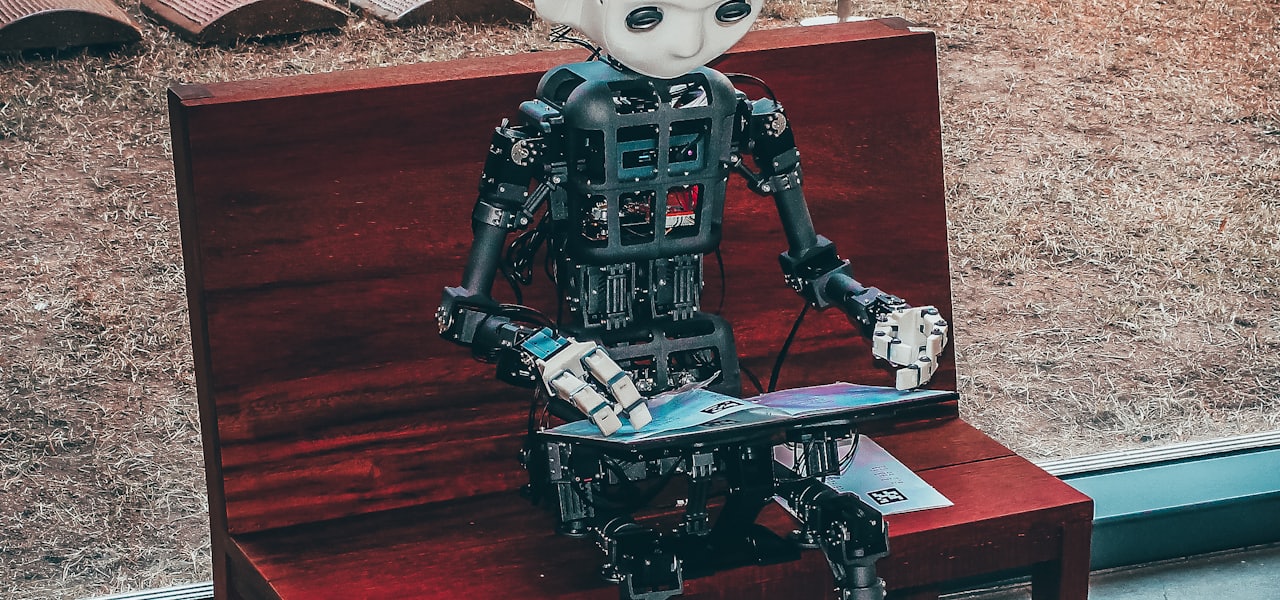
Brain technology, or self-learning know-how systems, defines a technology that employs latest findings in neuroscience. [see also neuro implants] The term was first introduced by the Artificial Intelligence Laboratory in Zurich, Switzerland, in the context of the Roboy project. Brain Technology can be employed in robots, know-how management systems and any other application with self-learning capabilities. In particular, Brain Technology applications allow the visualization of the underlying learning architecture often coined as "know-how maps". == Research and applications == The first demonstrations of BC in humans and animals took place in the 1960s when Grey Walter demonstrated use of non-invasively recorded encephalogram (EEG) signals from a human subject to control a slide projector (Graimann et al., 2010). Soon after Jacques J. Vidal coined the term brain–computer interface (BCI) in 1971, the Defense Advanced Research Projects Agency (DARPA) first starting funding brain–computer interface research and has since funded several brain–computer interface projects. That market is expected to reach a value of $1.72 billion by 2022. Brain–computer interfaces record brain activity, transmit the information out of the body, signal-process the data via algorithms, and convert them into command control signals. In 2012, a landmark study in Nature, led by pioneer Leigh Hochberg, MD, PhD, demonstrated that two people with tetraplegia were able to control robotic arms through thought when connected to the BrainGate neural interface system. The two participants were able to reach for and grasp objects in three-dimensional space, and one participant used the system to serve herself coffee for the first time since becoming paralyzed nearly 15 years prior. And in October 2020, two patients were able to wirelessly control an operating system to text, email, shop and bank using direct thought through the Stentrode brain computer interface (Journal of NeuroInterventional Surgery) in a study led by Thomas Oxley. This was the first time a brain–computer interface was implanted via the patient's blood vessels, eliminating the need for open brain surgery. Currently a number of groups are exploring a range of experimental devices using brain–computer interfaces, which have the potential to fundamentally change the way of life for patients with paralysis and a wide range of neurological disorders. These include: as Elon Musk, Facebook, and the University of California in San Francisco. The systems. This technology is also being explored as a neuromodulation device and may ultimately help diagnose and treat a range of brain pathologies, such as epilepsy and Parkinson's disease.
Rclone
Rclone is an open source, multi threaded, command line computer program to manage or migrate content on cloud and other high latency storage. Its capabilities include sync, transfer, crypt, cache, union, compress and mount. The rclone website lists supported backends including S3 and Google Drive. Descriptions of rclone often carry the strapline "Rclone syncs your files to cloud storage". Those prior to 2020 include the alternative "Rsync for Cloud Storage". Rclone is well known for its rclone sync and rclone mount commands. It provides further management functions analogous to those ordinarily used for files on local disks, but which tolerate some intermittent and unreliable service. Rclone is commonly used with media servers such as Plex, Emby or Jellyfin to stream content direct from consumer file storage services. Official Ubuntu, Debian, Fedora, Gentoo, Arch, Brew, Chocolatey, and other package managers include rclone. == History == Nick Craig-Wood was inspired by rsync. Concerns about the noise and power costs arising from home computer servers prompted him to embrace cloud storage and he began developing rclone as open source software in 2012 under the name swiftsync. Rclone was promoted to stable version 1.00 in July 2014. In May 2017, Amazon Drive barred new users of rclone and other upload utilities, citing security concerns. Amazon Drive had been advertised as offering unlimited storage for £55 per year. Amazon's AWS S3 service continues to support new rclone users. The original rclone logo was updated in September 2018. In March 2020, Nick Craig-Wood resigned from Memset Ltd, a cloud hosting company he founded, to focus on open source software. Amazon's AWS April 2020 public sector blog explained how the Fred Hutch Cancer Research Center were using rclone in their Motuz tool to migrate very large biomedical research datasets in and out of AWS S3 object stores. In November 2020, rclone was updated to correct a weakness in the way it generated passwords. Passwords for encrypted remotes can be generated randomly by rclone or supplied by the user. In all versions of rclone from 1.49.0 to 1.53.2 the seed value for generated passwords was based on the number of seconds elapsed in the day, and therefore not truly random. CVE-2020-28924 recommended users upgrade to the latest version of rclone and check the passwords protecting their encrypted remotes. Release 1.55 of rclone in March 2021 included features sponsored by CERN and their CS3MESH4EOSC project. The work was EU funded to promote vendor-neutral application programming interfaces and protocols for synchronisation and sharing of academic data on cloud storage. == Backends and commands == Rclone supports the following services as backends. There are others, built on standard protocols such as WebDAV or S3, that work. WebDAV backends do not support rclone functionality dependent on server side checksum or modtime. Remotes are usually defined interactively from these backends, local disk, or memory (as S3), with rclone config. Rclone can further wrap those remotes with one or more of alias, chunk, compress, crypt or union, remotes. Once defined, the remotes are referenced by other rclone commands interchangeably with the local drive. Remote names are followed by a colon to distinguish them from local drives. For example, a remote example_remote containing a folder, or pseudofolder, myfolder is referred to within a command as a path example_remote:/myfolder. Rclone commands directly apply to remotes, or mount them for file access or streaming. With appropriate cache options the mount can be addressed as if a conventional, block level disk. Commands are provided to serve remotes over SFTP, HTTP, WebDAV, FTP and DLNA. Commands can have sub-commands and flags. Filters determine which files on a remote that rclone commands are applied to. rclone rc passes commands or new parameters to existing rclone sessions and has an experimental web browser interface. === Crypt remotes === Rclone's crypt implements encryption of files at rest in cloud storage. It layers an encrypted remote over a pre-existing, cloud or other remote. Crypt is commonly used to encrypt / decrypt media, for streaming, on consumer storage services such as Google Drive. Rclone's configuration file contains the crypt password. The password can be lightly obfuscated, or the whole rclone.conf file can be encrypted. Crypt can either encrypt file content and name, or additionally full paths. In the latter case there is a potential clash with encryption for cloud backends, such as Microsoft OneDrive, having limited path lengths. Crypt remotes do not encrypt object modification time or size. The encryption mechanism for content, name and path is available, for scrutiny, on the rclone website. Key derivation is with scrypt. === Example syntax (Linux) === These examples describe paths and file names but object keys behave similarly. To recursively copy files from directory remote_stuff, at the remote xmpl, to directory stuff in the home folder:- -v enables logging and -P, progress information. By default rclone checks the file integrity (hash) after copy; can retry each file up to three times if the operation is interrupted; uses up to four parallel transfer threads, and does not apply bandwidth throttling. Running the above command again copies any new or changed files at the remote to the local folder but, like default rsync behaviour, will not delete from the local directory, files which have been removed from the remote. To additionally delete files from the local folder which have been removed from the remote - more like the behaviour of rsync with a --delete flag:- And to delete files from the source after they have been transferred to the local directory - more like the behaviour of rsync with a --remove-source-file flag:- To mount the remote directory at a mountpoint in the pre-existing, empty stuff directory in the home directory (the ampersand at the end makes the mount command run as a background process):- Default rclone syntax can be modified. Alternative transfer, filter, conflict and backend specific flags are available. Performance choices include number of concurrent transfer threads; chunk size; bandwidth limit profiling, and cache aggression. == Academic evaluation == In 2018, University of Kentucky researchers published a conference paper comparing use of rclone and other command line, cloud data transfer agents for big data. The paper was published as a result of funding by the National Science Foundation. Later that year, University of Utah's Center for High Performance Computing examined the impact of rclone options on data transfer rates. == Rclone use at HPC research sites == Examples are University of Maryland, Iowa State University, Trinity College Dublin, NYU, BYU, Indiana University, CSC Finland, Utrecht University, University of Nebraska, University of Utah, North Carolina State University, Stony Brook, Tulane University, Washington State University, Georgia Tech, National Institutes of Health, Wharton, Yale, Harvard, Minnesota, Michigan State, Case Western Reserve University, University of South Dakota, Northern Arizona University, University of Pennsylvania, Stanford, University of Southern California, UC Santa Barbara, UC Irvine, UC Berkeley, and SURFnet. == Rclone and cybercrime == May 2020 reports stated rclone had been used by hackers to exploit Diebold Nixdorf ATMs with ProLock ransomware. The FBI issued a Flash Alert MI-000125-MW on May 4, 2020, in relation to the compromise. They issued a further, related alert 20200901–001 in September 2020. Attackers had exfiltrated / encrypted data from organisations involved in healthcare, construction, finance, and legal services. Multiple US government agencies, and industrial entities were affected. Researchers established the hackers spent about a month exploring the breached networks, using rclone to archive stolen data to cloud storage, before encrypting the target system. Reported targets included LaSalle County, and the city of Novi Sad. The FBI warned January 2021, in Private Industry Notification 20210106–001, of extortion activity using Egregor ransomware and rclone. Organisations worldwide had been threatened with public release of exfiltrated data. In some cases rclone had been disguised under the name svchost. Bookseller Barnes & Noble, US retailer Kmart, games developer Ubisoft and the Vancouver metro system have been reported as victims. An April 2021, cybersecurity investigation into SonicWall VPN zero-day vulnerability SNWLID-2021-0001 by FireEye's Mandiant team established attackers UNC2447 used rclone for reconnaissance and exfiltration of victims' files. Cybersecurity and Infrastructure Security Agency Analysis Report AR21-126A confirmed this use of rclone in FiveHands ransomware attacks. A June 2021, Microsoft Security Intelligence Twitter post identified use of rclone in BazaCall cyber attacks. The attackers sent emails e